

Các bậc cha mẹ mới thường bối rối trước một câu hỏi: Tôi nên thay tã cho trẻ sơ sinh bao lâu một lần? Tần suất thay tã phù hợp không chỉ quan trọng đối với sự thoải mái của bé mà còn quan trọng đối với sức khỏe của bé. Bài viết này trình bày chi tiết về các phương pháp tốt nhất để thay tã cho trẻ sơ sinh, giúp bạn dễ dàng thành thạo kỹ năng nuôi dạy con hàng ngày nhưng quan trọng này.
1. Tần suất thay tã cho trẻ sơ sinh
2. Tác động của việc thay đổi thường xuyên so với việc không thay đổi trong thời gian dài
3. Chuẩn bị tã dựa trên tần suất thay tã
4. Điều chỉnh tần suất thay đổi dựa trên hoàn cảnh
5. Lợi ích của việc thay tã thường xuyên
6. Mẹo thay tã
Tần suất thay tã cho trẻ sơ sinh
Hệ tiêu hóa của trẻ sơ sinh đang trưởng thành. Do đó, trẻ thường xuyên đi ngoài và cần thay tã thường xuyên. Trẻ sơ sinh thường cần thay tã 10 đến 12 lần một ngày. Kiểm tra tã sau mỗi lần cho bé bú để đảm bảo bé khô ráo và thoải mái. Thay tã thường xuyên không chỉ giúp bé thoải mái mà còn giúp ngăn ngừa các vấn đề về da.
Nhận biết các dấu hiệu cần thay tã
- Tã phồng lên hoặc ướt và nặng: Đây là dấu hiệu trực tiếp nhất cho thấy tã đầy nước tiểu và cần phải thay.
- Bé của bạn có biểu hiện khó chịu: Nếu bé khóc và bồn chồn, đã đến lúc phải thay tã. Da của trẻ sơ sinh cực kỳ nhạy cảm, và tã ướt và nặng có thể khiến bé khó chịu.
- Kiểm tra thường xuyên: Ngay cả khi tã trông khô, bạn cũng nên kiểm tra ít nhất 2-3 giờ một lần để tránh hăm tã. Cố gắng kiểm tra tã khi bé thức dậy vào ban đêm để bú.
Tác động của việc thay đổi thường xuyên so với việc không thay đổi trong thời gian dài
Lợi ích của việc thay đổi thường xuyên
- Ngăn ngừa hăm tã: Thay tã thường xuyên có thể giúp da bé khô ráo và giảm nguy cơ hăm tã bằng cách hạn chế tiếp xúc với nước tiểu và phân.
- Sự thoải mái của bé: Tã khô giúp bé thoải mái, giảm quấy khóc và bồn chồn, đồng thời giúp bé ngủ ngon hơn.
- Ngăn ngừa nhiễm trùng: Thay tã kịp thời giúp giảm sự phát triển của vi khuẩn, ngăn ngừa nhiễm trùng đường tiết niệu và da.
Rủi ro khi không thay đổi trong thời gian dài
- Hăm tã: Không thay tã trong thời gian dài có thể khiến da tiếp xúc với độ ẩm trong thời gian dài, làm tăng nguy cơ hăm tã. Hăm tã không chỉ gây đau đớn và khó chịu cho bé mà còn có thể cần dùng thuốc.
- Nguy cơ nhiễm trùng: Vi khuẩn trong nước tiểu và phân có thể gây nhiễm trùng da và trong trường hợp nghiêm trọng có thể gây nhiễm trùng đường tiết niệu.
- Khó chịu và quấy khóc: Tã ướt và nặng có thể khiến bé khó chịu và quấy khóc, ảnh hưởng đến tâm trạng và giấc ngủ của bé, khiến cha mẹ kiệt sức và lo lắng.
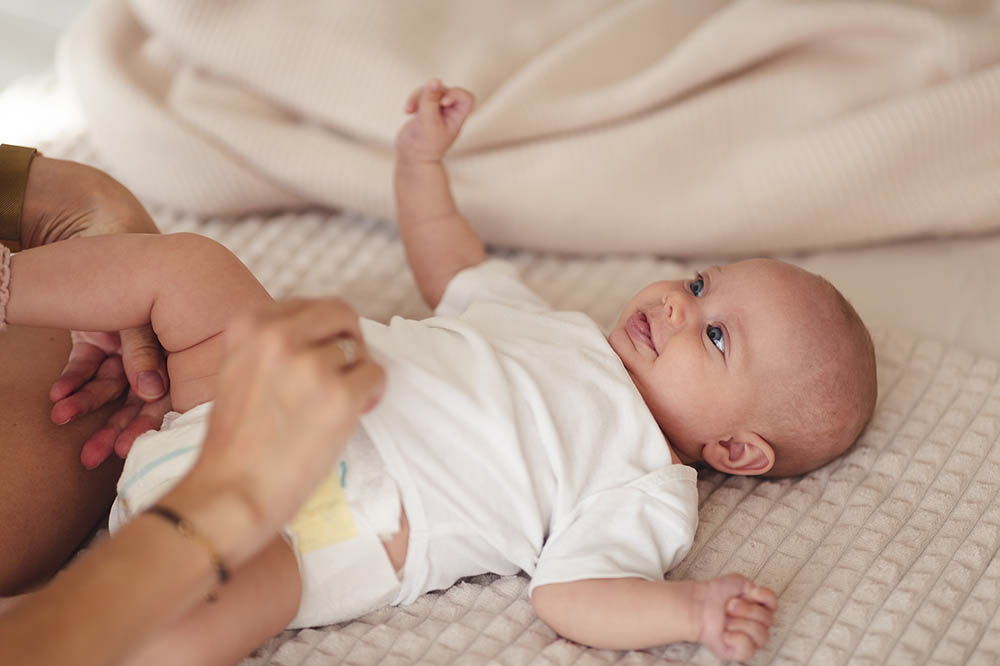
Chuẩn bị tã dựa trên tần suất thay tã
Chuẩn bị hàng ngày
Tã cần được thay khoảng 10 đến 12 lần một ngày, vì vậy nên chuẩn bị 12 tã một ngày để phòng trường hợp khẩn cấp. Cha mẹ có thể điều chỉnh số lượng tã theo mức tiêu thụ thực tế, vì mỗi bé là khác nhau.
Chuẩn bị hàng tuần
Cần khoảng 84 tã một tuần. Nên dự trữ một vài tã dự phòng cho những tình huống đặc biệt hoặc nhu cầu không lường trước. Ví dụ, nếu có kế hoạch đi du lịch hoặc sự kiện, có thể cần thêm tã.
Chuẩn bị hàng tháng
Mỗi tháng cần khoảng 360 tã. Điều chỉnh số lượng tã theo mức tiêu thụ thực tế để đảm bảo bạn có đủ tã. Khi mua, nên chọn gói lớn vì không chỉ tiết kiệm hơn mà còn giảm bớt rắc rối khi mua nhiều lần.
Điều chỉnh tần suất thay đổi dựa trên hoàn cảnh
Tần suất đi tiểu
Trẻ sơ sinh thường đi tiểu sau mỗi 1 đến 3 giờ, và nên kiểm tra và thay tã sau mỗi lần đi tiểu. Kiểm tra tã sau mỗi lần cho bé bú và bất cứ khi nào bé thức dậy.
Tần suất đi tiêu
Số lần đi ngoài ở trẻ sơ sinh thay đổi mỗi ngày. Một số trẻ có thể đi ngoài nhiều lần trong ngày, trong khi những trẻ khác thì ít hơn. Tã nên được thay ngay sau mỗi lần đi ngoài để giữ cho da sạch và khô. Điều này không chỉ ngăn ngừa hăm tã mà còn giảm nguy cơ nhiễm trùng da.
Lợi ích của việc thay tã thường xuyên
Ngăn ngừa bệnh chàm và nhiễm trùng
Thay tã thường xuyên giúp ngăn ngừa bệnh chàm và nhiễm trùng da, giúp da bé khỏe mạnh. Bệnh chàm và nhiễm trùng có ảnh hưởng lớn đến sức khỏe của bé và cần được chú ý và phòng ngừa đặc biệt.
Cải thiện sự thoải mái cho bé
Tã khô sẽ giúp bé thoải mái, giảm khóc và giúp bé ngủ ngon. Giấc ngủ chất lượng rất quan trọng cho sự phát triển và tăng trưởng của bé, vì vậy, giữ tã khô ráo là rất quan trọng.
Thúc đẩy tăng trưởng lành mạnh
Thói quen thay tã tốt có thể giúp ngăn ngừa các vấn đề sức khỏe do bệnh chàm hoặc nhiễm trùng gây ra, thúc đẩy sự phát triển khỏe mạnh của bé. Sự phát triển khỏe mạnh của bé không chỉ đòi hỏi chế độ ăn uống hợp lý và ngủ đủ giấc mà còn cần sự chăm sóc tỉ mỉ hàng ngày.
Mẹo thay tã
Thay tã vào ban đêm
Khi thay tã vào ban đêm, hãy cố gắng sử dụng tã qua đêm hoặc tã thấm hút tốt hơn để giảm số lần thay tã vào ban đêm để đảm bảo chất lượng giấc ngủ cho cả bé và bố mẹ. Nếu bé thức dậy để bú vào ban đêm, bạn có thể kiểm tra và thay tã trên đường đi.
Thay tã khi ra ngoài
Khi ra ngoài, hãy đảm bảo bạn có đủ tã, khăn lau và miếng lót thay tã để thay tã cho bé bất cứ lúc nào. Khi thay tã ở nơi công cộng, hãy chọn nơi sạch sẽ và cân nhắc đến sự an toàn và thoải mái của bé.
Phần kết luận
Là cha mẹ mới, bạn phải hiểu cách thay tã cho trẻ sơ sinh đúng cách để đảm bảo sức khỏe cho bé. Làm theo hướng dẫn này không chỉ đảm bảo sự thoải mái và sức khỏe cho bé mà còn giúp bạn tự tin và có thêm kinh nghiệm làm cha mẹ. Hãy nhớ rằng thay tã thường xuyên, nhận biết các dấu hiệu thay tã kịp thời, luôn có đủ tã trong tầm tay và điều chỉnh tần suất thay tã dựa trên tình huống là những bước quan trọng trong việc chăm sóc sức khỏe và sự phát triển của bé. Chúng tôi hy vọng hướng dẫn này giúp việc thay tã cho trẻ sơ sinh của bạn dễ dàng hơn và giúp bé luôn khô ráo và thoải mái khi bé lớn lên.
 English
  Русский
  Español
  Tiếng Việt
  العربية
  Монгол
  ไทย
ไทย  日本語
日本語  한국어
한국어  Français
  Deutsch
  Português
  Bahasa Indonesia
  Türkçe
  Italiano
  Nederlands
  Svenska
  Dansk
Dansk  Magyar
  Polski
  Čeština
  Slovenčina
  Suomi
Suomi  Română
  Bahasa Melayu
  O‘zbekcha
  (فارسی (افغانستان
  Հայերեն